Are we just riding the waves of rising and falling technology?
For the past 15 years, I’ve been writing grants to fund arts education and professional learning partnerships with schools and community organizations. Increasingly, funders have added “use of technology” to their selection criteria, asking, for example, How does your project use technology to support the creative learning process? or, How will you use assistive technology to increase access and inclusion? New technology signifies progress and innovation, and allows schools to brag about their latest and greatest tech acquisition.
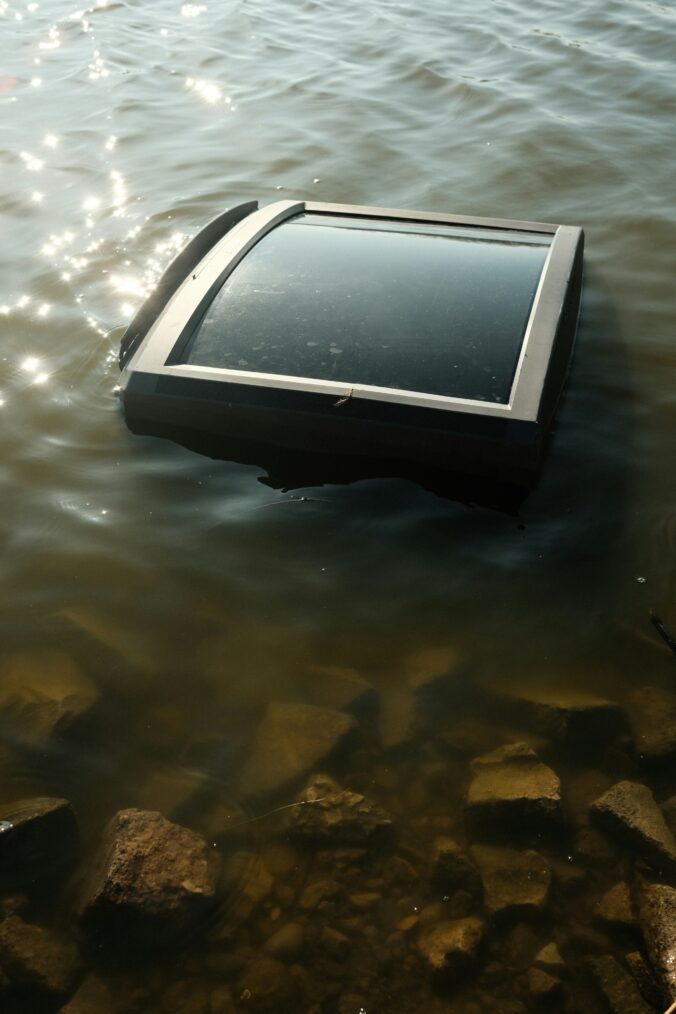
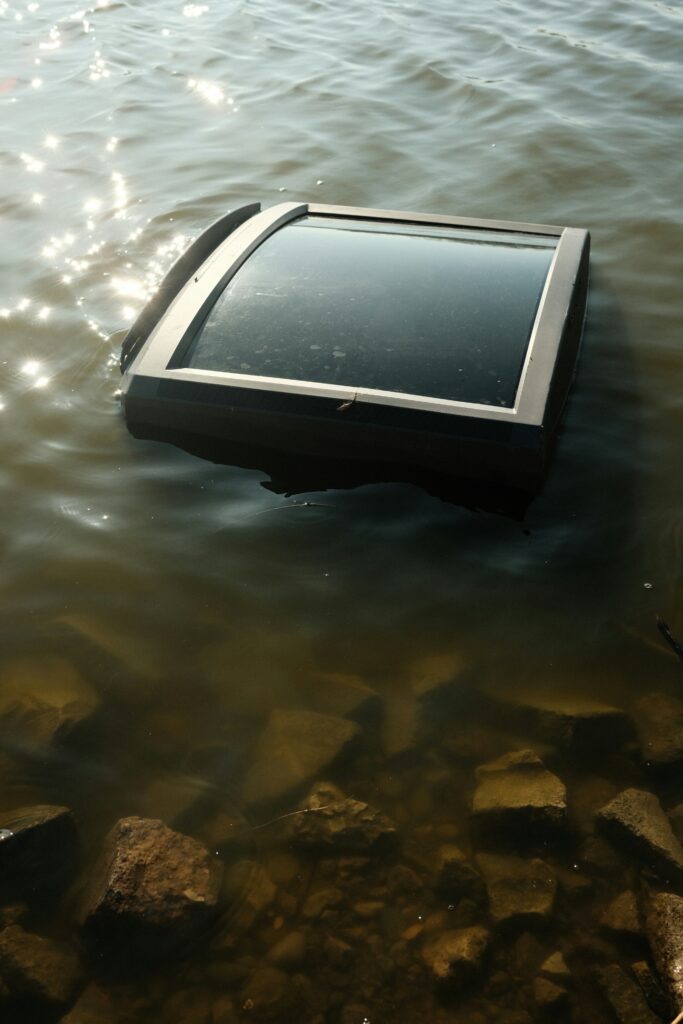
In many ways, new technology can support learning and teaching. But when I passed an abandoned flat screen monitor on the side of the road this morning, I remembered that so much of today’s technology has a short shelf life. Equipment is often designed with obsolescence in mind, and digital tech is updated faster than budgets can keep up.
I appreciated the questions asked by the Triple E framework that can help us evaluate the use and adoption of technology, and think critically before blindly purchasing the Next Great Thing:
Triple E Framework questions
- Does the tool foster engagement in learning? Does it motivate students to shift from passive to active social learners?
- Does the tool enhance learning goals? Does it scaffold understanding or allow students to demonstrate knowledge in ways impossible with a “traditional” tool?
- Does the tech extend learning goals? Does it bridge school work to everyday life?
But I think the Framework is missing a few questions, like:
- Will this tool endure? What is its shelf life, or how can it be used as other technologies update? Will it be compatible? How will we continue to train educators to use this tool, so that it is used in the classroom over time?
- Are there any downsides to using this technology? What might we lose in the process? What are the non-financial costs?
- Who will have access to this technology? Who is left out?
Using new tools to help revitalize old ones
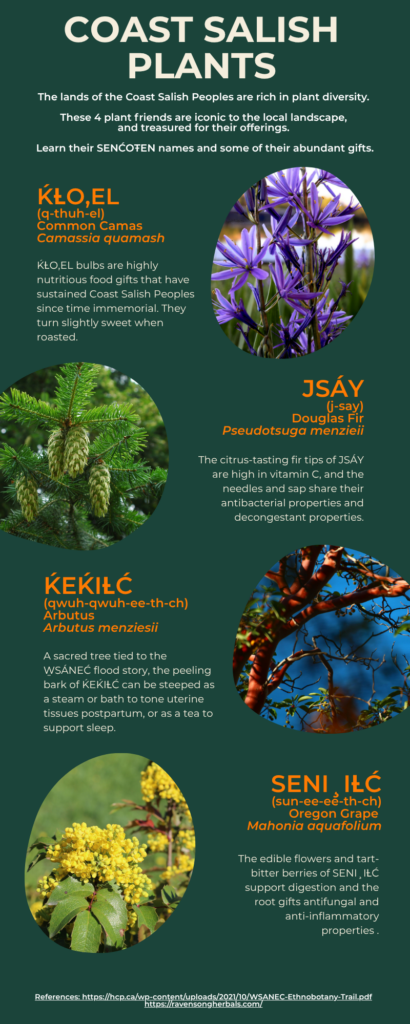
As I mentioned, there are many ways technology can support learning & teaching. I designed the adjacent infographic using a newer tool, Canva, to help revitalize and honour ancient knowledge. Nothing will surpass the experience of learning from Traditional Knowledge Keepers on the land, within a cultural context, and in deep relationship with these plants. But perhaps an infographic like this can spark an interest or a memory, and if done with care and integrity, can support appropriate access to and gratitude for these special plants.
These plants, which have endured for thousands of years, remind us that we don’t have to passively ride the fast waves of technology – we can take our time, ask critical questions, and thoughtfully engage.
Listen to SENĆOŦEN speakers say the names of local plants with online audio files produced by NIȽ TU,O Child & Family Services.
Leave a Reply
You must be logged in to post a comment.